

What actually makes a difference day to day
Modern dishwashers are sold with a frankly daft number of bells and whistles, but most people just want three things: dishes that come out clean, dry and done without the machine sounding like a jet engine. The good news is that only a handful of features really affect that. The rest are, at best, nice-to-haves and, at worst, expensive distractions.
Across manufacturer guides, independent tests and retailer advice, the same pattern keeps coming up: focus on cleaning performance, flexible space inside, noise level, energy and water use, and how well the machine dries. Extras like WiFi, interior lights and endless special programmes are far less important for most households.
- Loading the racks properly so spray arms can turn.
- Using the Auto or Eco programme for most washes.
- Keeping the filter and spray arms clean.
Get those three right and many tired-looking dishwashers suddenly behave like new ones.
Core features that are genuinely worth paying attention to
Capacity and flexible racks: making everything actually fit
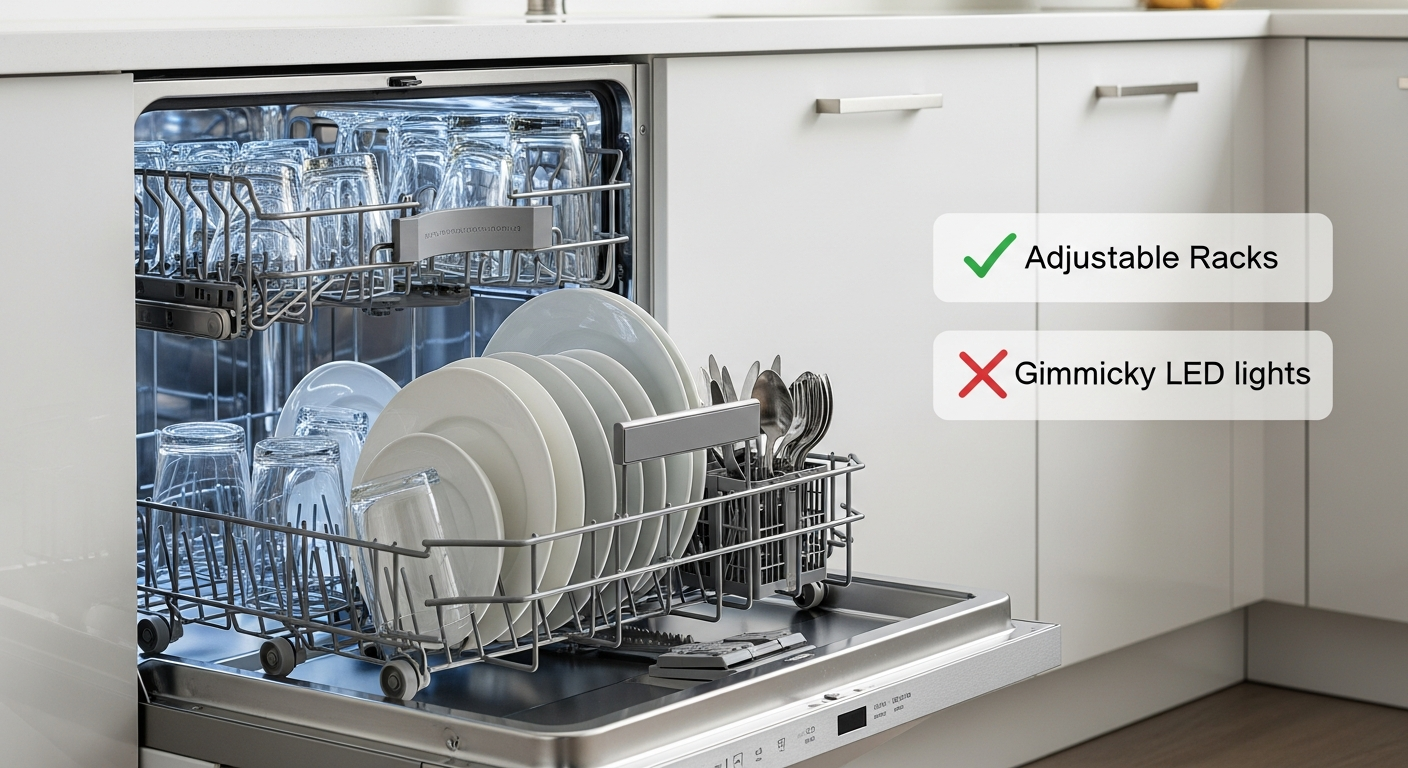
Capacity (how many “place settings” a dishwasher can hold) matters, but how that space is arranged matters more. Adjustable upper racks, fold-down tines and movable cutlery baskets make it much easier to load pans, tall glasses and awkward dishes without resorting to the sink.
Third racks – a shallow tray at the very top for cutlery and utensils – are repeatedly recommended as one of the most useful modern features. They free up space in the lower racks, help items wash more evenly and make unloading cutlery less of a lucky dip.
Noise level: especially important in open-plan homes
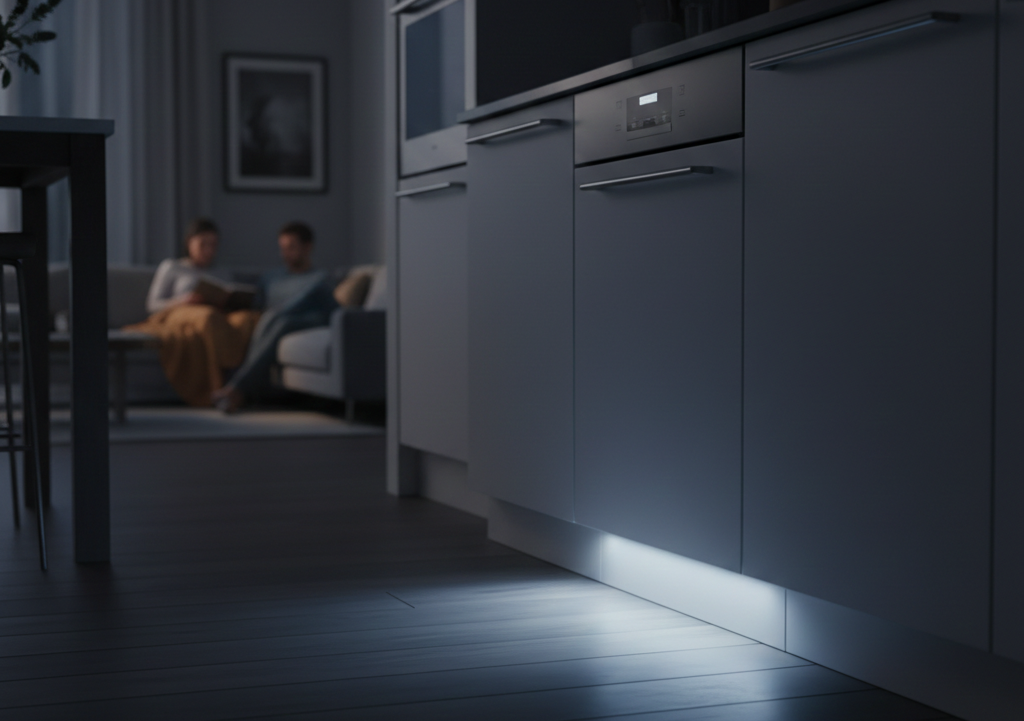
Noise is measured in decibels (dB). Older or cheaper machines can sit around the high 40s to 50 dB, which is noticeably loud in an open-plan kitchen. Modern “quiet” models typically come in below about 45 dB, and the very quiet premium machines drop to around 39–40 dB.
If your dishwasher is near a living area or you like to run it overnight, noise is one of the most important specs to check. Good insulation, brushless motors and stainless-steel tubs all help keep sound levels down.
Energy and water efficiency (and the humble Eco/Auto programme)
Energy labels and litres per cycle matter for your bills, especially if you run your dishwasher most days. Modern, efficient machines use far less water and electricity than older models, particularly on their Eco programme.
Eco and Auto programmes typically run longer at lower temperatures, using sensors to adjust water and time to how dirty the load is. Independent testing and manufacturer advice both point to these as the best all-round choice for everyday washing – they tend to give reliable cleaning with lower running costs.
- Use Eco or Auto for the majority of loads.
- Use a Quick/Express wash only for lightly soiled dishes.
- Run a hot Intensive cycle occasionally to clear grease and limescale.
This pattern balances clean results, sensible running costs and looking after the machine.
Drying system: why some machines handle plastics better
Not all drying systems are equal. Basic dishwashers often rely on simple condensation drying – the stainless-steel interior stays warm, steam condenses and drips away. This works reasonably well for plates and glasses but often leaves plastics wet.
More advanced machines add fan-assisted drying, auto-opening doors at the end of the cycle, or mineral-based systems such as Zeolith (used by brands like Bosch and Siemens). Zeolite granules absorb moisture and release heat, creating warm, dry air that circulates around the cavity.
Testing generally finds Zeolith-style systems and auto-opening doors do a noticeably better job of drying plastics, while using less energy than old-fashioned “blast it with a heater” methods.
- Open the door as soon as the programme finishes to let steam escape.
- Tilt any deep plastic items slightly so water can run off.
- Use rinse aid – it helps water sheet off surfaces.
If you are buying new and hate tea-towel duty, features like fan-assisted drying, auto door opening or Zeolith-style systems are genuinely worth shortlisting.
Filters, spray arms and stainless-steel tubs
Clogged filters and blocked spray-arm holes are among the most common reasons dishwashers stop cleaning properly. Machines that make it easy to twist out and rinse the filter, and pop off the spray arms, are much simpler to keep in good condition.
Stainless-steel tubs are quieter, more durable and tend to help with condensation-style drying compared with all-plastic interiors. Many better mid-range and premium machines now use stainless tubs as standard.
- Rinse the filter under the tap about once a week (more often if you cook a lot).
- Check spray-arm holes and poke out any debris with a cocktail stick each month.
- Wipe around the door seal and bottom of the door to remove grime.
- Top up salt and rinse aid as needed.
- Run a machine-cleaning cycle with a dishwasher cleaner every couple of months.
These simple jobs do more for performance than any amount of clever tech.
Features that are nice, but not essential for most people
Smart and WiFi features
Smart dishwashers can connect to your phone, smartwatch or even voice assistants. In practice, most apps let you start or stop a cycle remotely, see how long is left, get a notification when the load is done, and sometimes download extra programmes or see energy use.
These are genuinely handy if you are away from the kitchen a lot, or you like to run the dishwasher on off-peak tariffs and want to control it from the sofa. They do not, however, make plates magically cleaner. The core wash system is what matters, not whether you pressed Start on the door or on your phone.
If you are torn between a slightly quieter, more efficient non-smart model and a noisier smart model at the same price, most households will be happier with the quieter option in the long run.
Endless special programmes and marketing names
Some dishwashers proudly advertise ten or more different programmes, each with its own catchy name. In reality, most households live on a steady diet of three or four: Eco or Auto for daily use, an Intensive option for very dirty pans, and a Quick cycle when you are in a rush.
Specialist glass, hygiene or baby-bottle cycles can be useful in specific situations, but they are rarely worth paying a big premium for on their own. A well-designed Eco/Auto cycle and sensible temperature range will serve most homes perfectly well.
Interior lights, fancy handles and glossy displays
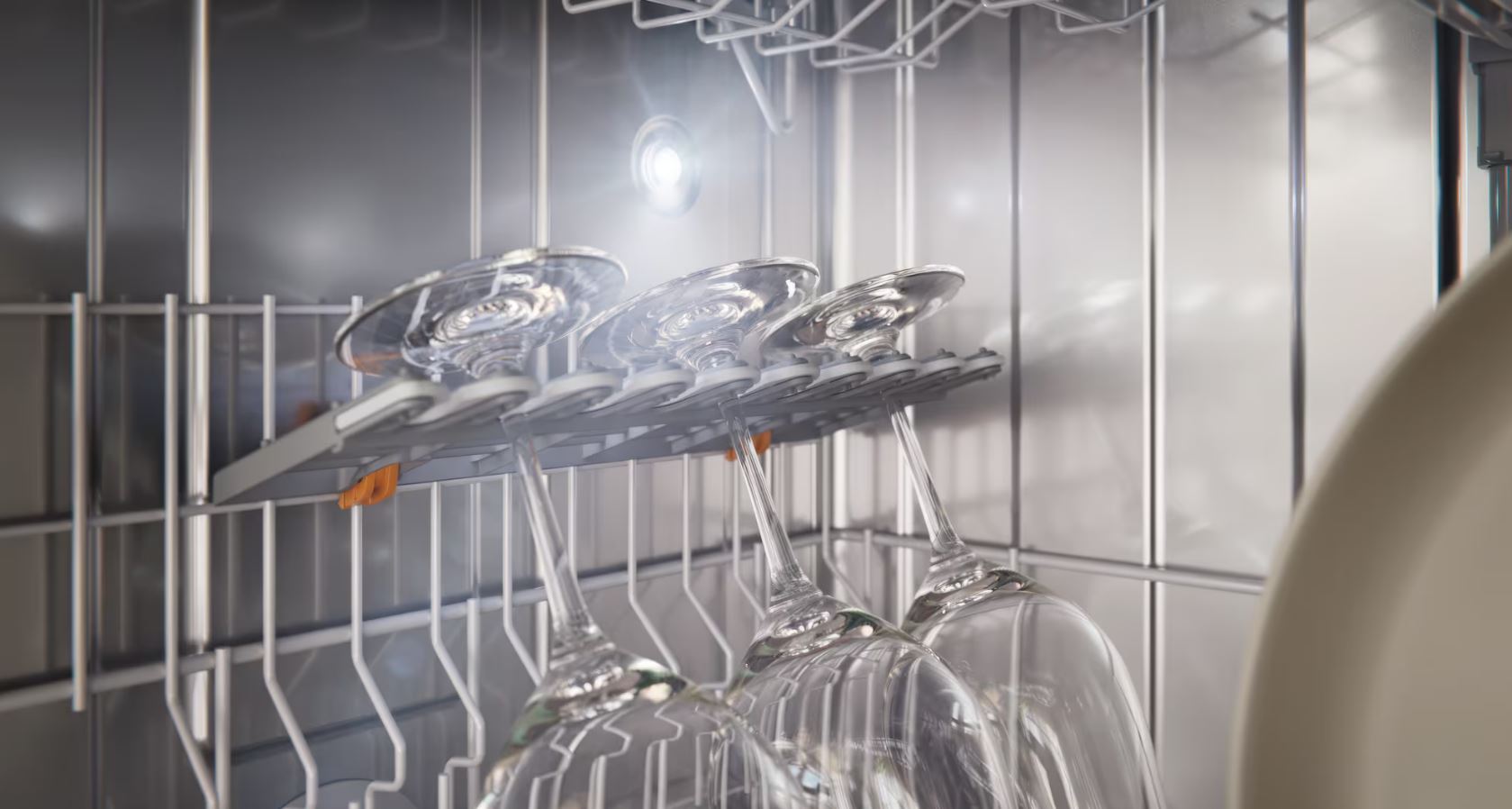
Interior LED lighting, touchscreens, illuminated logos and unusual handle designs all fall firmly into the “nice, but not necessary” camp. They can make the machine feel more upmarket and are pleasant to live with, but they will not move the needle on cleaning performance.
If your budget is tight, it makes more sense to prioritise a quieter, more efficient machine with good racks than one with a dramatic light show every time you open the door.
Half-load buttons and other legacy features
Traditional “half-load” buttons were designed for when dishwashers sprayed water mainly in one area. Many modern models now use sensors to detect how much is in the machine and adjust automatically, making a dedicated half-load button less critical.
For small loads, it is usually more efficient to wait for a full load, or to use a Quick/Express programme, than to obsess over half-load settings. If you regularly run very small loads, a slimline or compact dishwasher may be a better long-term solution.
How to get the most out of the dishwasher you already own
Load it so water can actually reach everything
Before blaming the machine, it is worth checking how it is loaded. Poor loading is behind a surprising number of “my dishwasher is rubbish” complaints.
- Keep plates facing the centre and avoid nesting bowls so water can flow between them.
- Do not let tall items block the spray arms – spin the arms by hand after loading to make sure they turn freely.
- Angle plastics and deep dishes so water can run off rather than pool.
- Mix cutlery types in the basket so spoons do not spoon each other and stay dirty.
If things on the top rack are still coming out grim, check that the upper spray arm is not blocked and that the top rack is not pushed too far up, out of the main spray pattern.
Use the right detergent, salt and rinse aid
Detergent tablets, separate dishwasher salt and rinse aid all do different jobs. Tablets provide cleaning agents, salt regenerates the built-in water softener, and rinse aid helps water run off surfaces for better drying and fewer marks.
Even with “3‑in‑1” tablets, manufacturers in hard-water areas still recommend using salt and often rinse aid as well. In much of the UK, skipping salt is a fast way to limescale build-up and cloudy glasses.
- Cloudy glasses, white film: likely limescale – add or increase salt.
- Clean but spotty dishes: increase rinse aid one notch.
- Smears or rainbow film: reduce rinse aid slightly.
Small tweaks here often fix “mystery” drying and spotting problems without touching the hardware.
Choose sensible programmes for each load
Instead of endlessly experimenting with every programme on the dial, keep it simple:
- Everyday mixed loads: Eco or Auto.
- Lightly soiled or “we just want this quickly”: Quick/Express.
- Very dirty pans or baked-on trays: Intensive.
This mirrors how manufacturers and independent testers tend to evaluate machines in practice, and it avoids the common trap of running a hot, short programme for everything “just to be safe”, which can actually give worse results and higher bills.
Simple maintenance that beats many fancy features
A few minutes of regular maintenance has more impact on cleaning performance than most bonus features ever will.
- Empty and rinse the filter weekly to prevent bits of food recirculating onto plates.
- Check spray-arm holes and clear any blockages.
- Wipe around the door seal and bottom of the door to remove grime.
- Top up salt and rinse aid as needed.
- Run a hot cleaning cycle with a dishwasher cleaner every couple of months.
If your dishes have started coming out worse than they used to, doing all of the above is often enough to restore performance without spending a penny on new kit.
Putting it together: what to focus on when choosing your next dishwasher
When you are ready to replace your current machine, use the following as a quick checklist.
- Prioritise: reliable cleaning performance, flexible racks (ideally with a third rack), low noise (especially under about 45 dB for open-plan spaces), good energy and water ratings, and a drying system that does not leave plastics dripping.
- Useful extras: clear, simple controls; easy-to-clean filters; stainless-steel tub; a decent Quick programme.
- Nice-to-haves: WiFi/app control, interior lights, specialist niche programmes for things you will genuinely use.
- Low priority for most people: dozens of rarely used cycles, flashy displays, unusual handle designs, and smart features you will forget about after week one.