

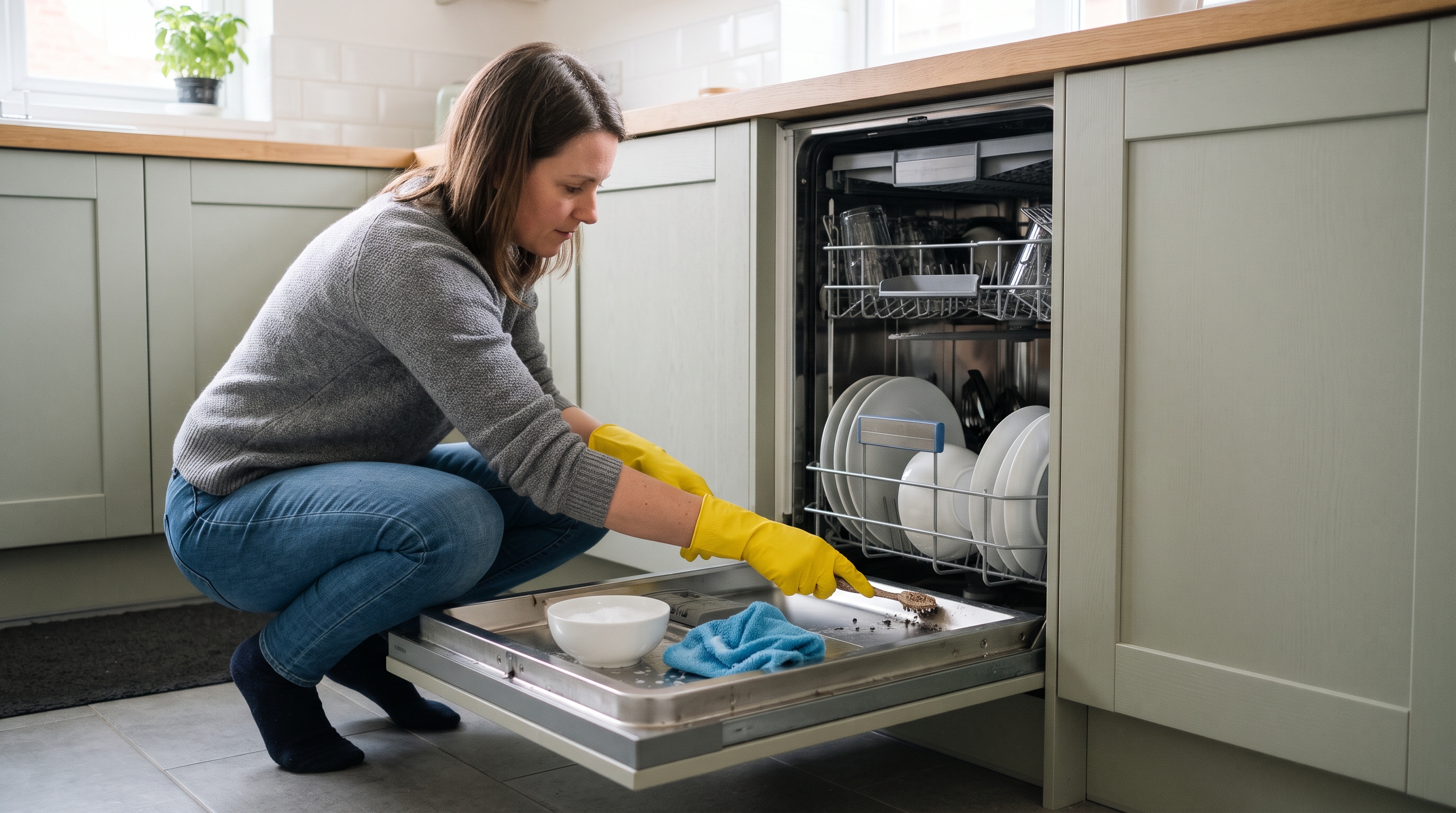
You open the dishwasher, glance at the rubber seal round the edge of the tub, and there it is: a line of black specks in the corners, or a grubby grey smear along the bottom. It is one of the most common things people notice on a dishwasher that is a few years old, and the good news is that most of the time it comes off with ten minutes and a toothbrush. The less good news is that if it has been left long enough, the mould can stain the rubber itself, and at that point the honest answer is a new seal rather than more scrubbing.
This guide covers why the seal goes mouldy, how to clean it properly without damaging it, when to give up and replace it, and how to stop it coming back.
Why the door seal goes mouldy in the first place
The seal (often called the door gasket) is a soft rubber strip pressed into a channel around the front edge of the tub. When the door shuts, it squashes against the inside of the door to keep the water in. That makes it a near-perfect home for mould:
- It stays damp. After a cycle the tub is warm and steamy, and with the door shut that moisture has nowhere to go. The folds and corners of the seal are the last places to dry.
- It catches food and grease. Fine food particles and fat splash onto the seal and sit in the grooves, giving mould something to feed on.
- It never gets a proper wash. The spray arms clean the racks and the tub, but the seal sits right at the edge where the water barely reaches with any force.
- Short, cool programmes don't help. Running only quick or eco cycles means the inside of the machine rarely gets hot enough to discourage growth, especially along the seal.
The bottom corners and the lower part of the door are usually worst, because that is where water drips and collects.
Quick Fix: If the marks are fresh and only on the surface, a cloth dipped in warm water with a little washing-up liquid, plus an old toothbrush for the corners, will often shift them in a few minutes. Dry the seal afterwards and leave the door open for an hour.
How to clean a mouldy dishwasher door seal
Work through these steps in order and stop as soon as the seal is clean. There is no prize for going straight to the strongest cleaner.
1. Check whether the seal can come out
On many dishwashers the main seal simply pushes into a channel round the tub and can be pulled out by hand, starting from one top corner. Check your manual first. If it comes out easily, cleaning it at the sink is far easier than kneeling in front of the machine, and you can clean the channel behind it, which is often just as grubby. If it is glued or clipped in, or you are not sure, leave it in place and clean it where it is.
2. Wash off the loose grime
Use warm water, a squirt of washing-up liquid and a soft cloth to remove grease and food residue. Use an old toothbrush to get into the folds and corners. Wipe the channel and the inside edge of the door too, including the strip along the bottom of the door, which is easy to miss.
3. Tackle the black spots
For mould that is still there after washing, you have a few options. Try them in this order:
- White vinegar: wipe neat white vinegar onto the marks, leave it for 15 to 20 minutes, then scrub with the toothbrush and rinse with clean water. It works well on light, recent growth.
- Bicarbonate of soda paste: mix bicarbonate of soda with a little water into a thick paste, work it into the grooves with the toothbrush, then rinse. It is gently abrasive and good for grubby film.
- A diluted bleach-based mould spray or gel: for stubborn black spots, a household mould remover applied on a cloth or cotton bud, left for the time on the label, then rinsed off thoroughly. Wear rubber gloves, keep the kitchen ventilated and keep it on the seal rather than spraying it round the tub.
Warning: Never mix bleach with vinegar, ammonia or other cleaning products, as this can release harmful gas. If you have used vinegar, rinse the seal well with plain water before trying a bleach-based product. Don't use neat bleach, scouring pads, wire wool or sharp tools on the seal either: they can dry out, scratch or nick the rubber, and a damaged seal is how leaks start. Rinse away every trace of cleaner before you run the dishwasher again.
4. Rinse, dry and refit
Rinse the seal and the channel with clean water and dry both completely with a towel. If you removed the seal, press it back into the channel starting at the top centre and working evenly down both sides, without stretching it. Run your fingers round it to make sure it is fully seated and not twisted, especially at the corners, then close the door gently.
5. Run a hot empty cycle
Finish with the hottest programme your dishwasher offers, empty, ideally with a dishwasher cleaner or machine-care product. This deals with mould spores elsewhere in the machine, such as the filter and the sump, which would otherwise reseed the seal within weeks. If your filter hasn't been cleaned recently, do that at the same time.
When cleaning isn't enough: replacing the seal
Sometimes you can scrub until the cows come home and the black marks stay put. That usually means the mould has grown into the rubber rather than sitting on top of it. The seal may be perfectly hygienic after a good clean, but it will look stained and tends to go mouldy again faster because the surface has worn and become slightly porous.
It is worth replacing the seal if:
- the black staining is still there after a thorough clean with a mould remover,
- the rubber feels hard, cracked, flattened or brittle,
- it has come loose at the corners or no longer sits snugly in its channel, or
- you are seeing water on the floor at the front of the machine.
Replacement seals are usually inexpensive, and on many models fitting one is a five-minute job: pull the old seal out, clean and dry the channel, then press the new one in from the top centre outwards. The important part is ordering the right one. Use the full model number from the rating plate, usually found on the inside edge of the door or the side of the tub, because seal shapes and lengths differ between models even from the same brand. Some dishwashers also have a separate seal along the bottom of the door, which is a different part and can be fiddlier to change. If the part description doesn't clearly match your model, check with the manufacturer's spare parts service before buying.
Top Tip: A new seal can feel firmer than the old one and the door may close a little more stiffly at first. That is normal. Close it gently rather than slamming it, and it will settle in after a few cycles.
How to stop the mould coming back
Mould on the seal is mostly a moisture problem, so the fixes are about letting the machine dry and keeping the seal clean.
- Let it breathe after a cycle. Once the programme has finished and cooled down, open the door slightly for an hour or so to let the steam escape. Many newer dishwashers do this automatically at the end of the cycle. Just mind small children and pets, and don't leave an open door where someone could trip over it.
- Wipe the seal once a week. A quick wipe with a damp cloth, followed by a dry one, takes under a minute and stops grime building up in the grooves.
- Clean the filter regularly. A dirty filter keeps the whole machine smelly and damp, which spreads spores. Every couple of weeks is a good habit for most households.
- Run a hot wash now and then. If you mostly use eco or quick programmes, run an intensive or hot programme every few weeks, and a machine-care cleaner about once a month.
- Scrape plates before loading. You don't need to rinse them, but clearing big bits of food means less debris ends up on the seal.
- Don't leave it full and shut for days. Dirty dishes sitting in a closed, warm machine are a feast for mould. If you won't run it for a while, use the rinse-and-hold programme or leave the door slightly open.
Reminder: Weekly, wipe and dry the door seal. Every couple of weeks, clean the filter. Monthly, run a hot empty cycle with a machine cleaner. Little and often beats one big scrubbing session every year.
Is black mould on the seal dangerous?
For most people, a few black spots on a dishwasher seal are a hygiene and appearance issue rather than a health emergency. Your dishes are washed with hot water and detergent inside the tub, not on the seal. Even so, it is worth cleaning off promptly, particularly if anyone in the house has asthma, allergies or a weakened immune system, and you don't want spores spreading to the rest of the machine. If you notice mould elsewhere in the kitchen as well, it may be worth looking at ventilation in the room more generally.
Bottom Line: Start gently with warm soapy water and a toothbrush, step up to vinegar or bicarbonate of soda, and use a diluted mould remover only for stubborn spots, rinsing it off well. If the staining has sunk into the rubber, or the seal is cracked or loose, replace it using your model number. Then keep it away for good by letting the machine dry after each cycle, wiping the seal weekly and running a hot clean every month.