

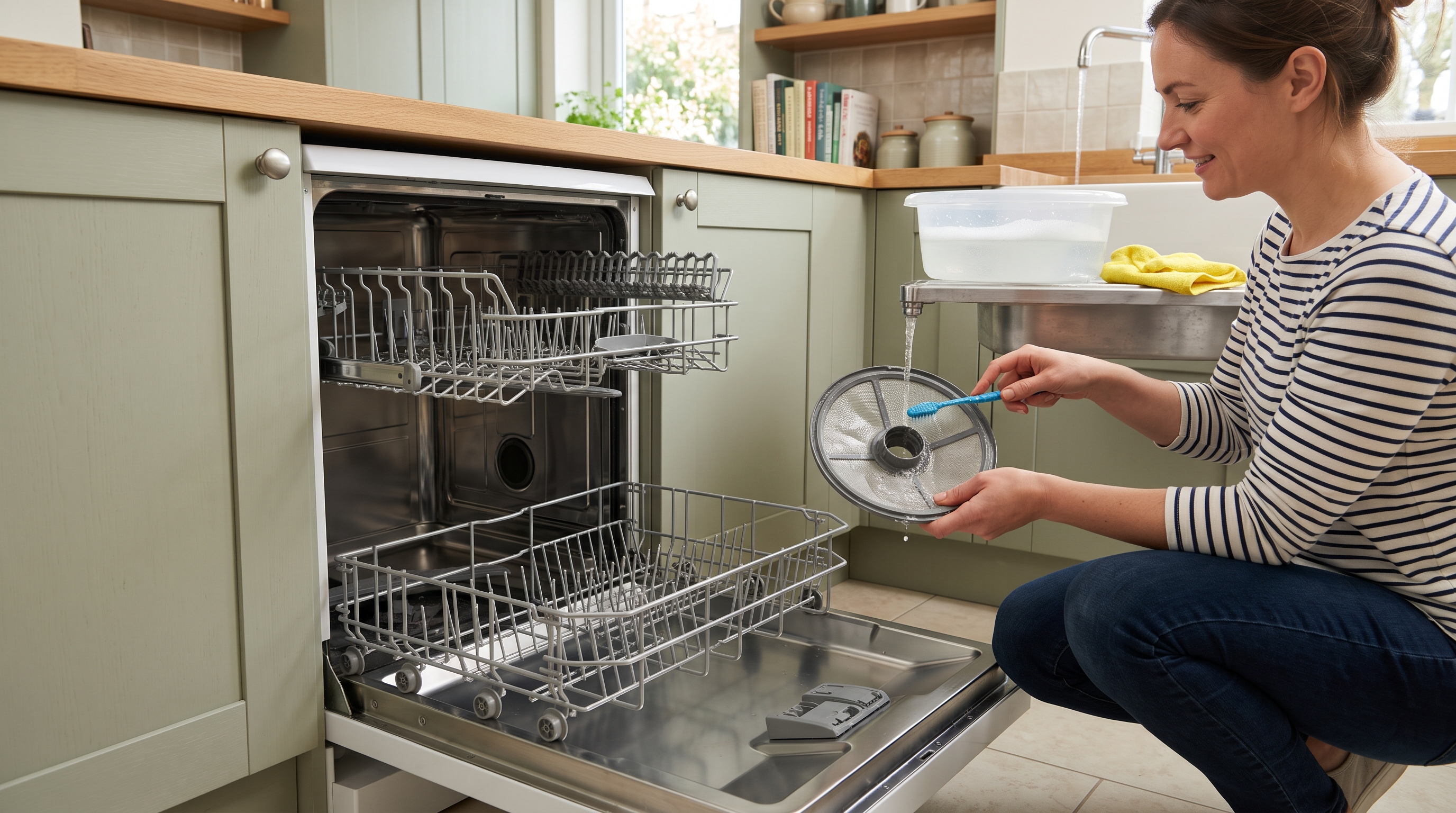
You take the filter out, scrub it under the hot tap until it gleams, click it back in, and a week later it is wearing a fuzzy black coat again. If that sounds familiar, you are not imagining it and you are not doing it wrong, exactly. A filter that keeps going mouldy is usually a sign that the mould is being fed or reseeded from somewhere else, and the filter is simply the place where it all ends up.
This guide explains why the filter is such a mould magnet, the usual reasons it comes straight back, and a cleaning routine that deals with the whole machine rather than just the bit you can see.
Why the filter is where mould shows up first
The filter sits at the lowest point of the tub, in a little well called the sump. Every scrap of food, every smear of grease and every drop of dirty water passes through it on the way out. After the cycle it stays warm and damp, it is dark once the door is shut, and there is usually a little water left in the sump below it. For mould and bacteria that is a five-star hotel with free breakfast.
So some build-up on the filter is normal. What is not normal is heavy black, green or furry growth that returns within days of a proper clean. That tells you something else is going on.
Quick Fix: Clean the filter, then wipe out the hole it sits in, the door seal and the bottom edge of the door. Run the hottest programme your dishwasher has, empty, with a dishwasher cleaner. Afterwards, leave the door slightly open so the tub can dry. Doing all of that in one go fixes most filters that keep going mouldy.
The usual reasons it keeps coming back
1. Only the filter is getting cleaned
The filter is easy to lift out, so it gets the attention. The well underneath it, the plastic housing it twists into and the sump below rarely do. Slime and food sludge collect there, and as soon as the clean filter goes back in, it is sitting in the source of the problem. Always wipe out the filter housing and sump too.
2. The mould is living somewhere else
If black spots appear on the filter every few days, the growth is often elsewhere in the machine and gets washed down to the filter each cycle. The usual hiding places are:
- The door seal, especially the folds along the bottom and the corners.
- The bottom edge of the door and the strip under it, which the spray never quite reaches.
- The spray arms, where trapped food can rot inside the nozzles.
- The cutlery basket and the runners the racks slide on.
Clean all of these at the same time as the filter, or you are just mopping the floor with the tap still running.
3. The machine never gets properly hot
Eco and quick programmes are great for energy bills, but they run cooler. If that is all your dishwasher ever does, grease builds up in the filter and pipework and gives mould something to eat. Manufacturers recommend a hot wash regularly to deal with this. Bosch, for example, suggests its Machine Care programme or the hottest programme with a dishwasher cleaner.
If you already use hot programmes and the dishes still come out lukewarm, the heater may not be working (more on that below).
4. Water is sitting in the bottom between cycles
A small amount of clean water in the sump is normal on many machines. A deeper pool, or murky water, is not. Standing water keeps the filter wet for days. Common causes:
- a partly blocked filter or drain pump;
- a kinked drain hose behind the machine;
- dirty water flowing back from the sink because the drain hose has no high loop under the worktop.
If you regularly find a puddle, sort the drainage first. Otherwise no amount of scrubbing will help.
5. The door stays shut and the machine sits unused
A dishwasher that is closed straight after a cycle, or left with dirty dishes in it for three days, stays humid inside. If your kitchen allows it, open the door a little at the end of the cycle so the steam can escape. Some newer machines open the door automatically for drying. If you only run a load every few days, rinse the worst food off plates before they go in so they are not rotting in the meantime.
6. Too much food is going down the drain
Modern dishwashers do not need plates rinsed spotless, but they do need the big stuff scraped off. Rice, pasta, bones and fruit peel end up in the filter, and a filter clogged with soft food grows mould very quickly. Scrape plates into the bin first. A quick rinse is not necessary unless the load is going to wait.
Warning: Never mix bleach with vinegar, dishwasher cleaner or other cleaning products. They can give off dangerous fumes. Many manufacturers also advise against bleach in the dishwasher because it can damage seals and stainless steel. Stick to hot soapy water, a soft brush and a dishwasher cleaner unless your manual says otherwise.
A deep clean that actually lasts
Set aside about half an hour. Switch the dishwasher off at the wall before you start.
- Remove the filter. On most machines you twist the central cylinder anticlockwise and lift it out, along with the flat mesh plate around it. Check your manual if it does not come out easily.
- Soak it. Put all the filter parts in a bowl of hot water with a squirt of washing-up liquid for 10 to 15 minutes to soften the grease.
- Scrub every part. Use an old toothbrush or a soft washing-up brush on both sides of the mesh and inside the cylinder. Avoid wire brushes and scourers, which can tear the fine mesh.
- Clean the sump. Soak up any standing water with a sponge or cloth. Wipe out the filter housing and the sump, feeling for anything stuck there, such as broken glass, olive stones or labels. Be careful of sharp bits.
- Do the seals and the door. Wipe along the door seal with a cloth dipped in hot soapy water, getting into the folds. Then do the bottom edge of the door and the strip under it.
- Check the spray arms. Spin them by hand. If they catch or the holes look blocked, remove them according to your manual and clear the nozzles with a cocktail stick.
- Refit everything. Make sure the filter clicks or locks fully into place. A loose filter lets food past into the pump.
- Run a hot cleaning cycle. Run the machine empty on its hottest programme, or its machine care programme, with a dishwasher cleaner.
- Let it dry. Leave the door open for an hour or two afterwards so the inside dries completely.
Is it mould, or just staining?
Not everything on a filter is mould. It helps to know what you are looking at:
- Black, green or furry patches that wipe off are mould. Clean them using the steps above.
- A pink or orange slimy film is usually bacteria that thrive in damp spots. It is not dangerous in small amounts and the same cleaning routine shifts it.
- An orange or red tint that will not scrub off on plastic parts is normally staining from tomato sauces or curry. It is harmless, and a hot cycle or a few days in sunlight often fades it.
- White, chalky crust is limescale. Check the salt and the water hardness setting rather than reaching for mould spray.
Keeping it from coming back
- Rinse the filter regularly. Beko recommends cleaning its filters once a week. If you have a busy household, a quick rinse weekly and a proper clean monthly is a sensible rhythm.
- Run a hot programme regularly, even if you mostly use eco, so grease does not get a foothold.
- Scrape plates properly before loading.
- Leave the door ajar after cycles where you can.
- Do not leave dirty loads sitting for days with the door shut.
- Wipe the door seal every week or two.
Reminder: Weekly, rinse the filter and wipe the seal. Monthly, deep clean the filter, sump and spray arms. Every month or two, run an empty hot cleaning cycle with a dishwasher cleaner. Put it in your calendar, because you will forget, and so will everyone else.
When it is time to replace a part or call someone
Most mouldy filters respond to a thorough clean and a change of habits. Look further if:
- The mesh is torn or the filter is warped. Food then gets past and rots in the pump and pipes. Replacement filters are inexpensive. Buy the genuine part for your model number.
- Dishes never come out hot, even on the hottest programme. The heating element or thermostat may have failed, which means the machine is washing cold. That is a job for an engineer.
- There is always standing water after a cycle, even with a clean filter and a properly looped drain hose. The drain pump or a non-return valve may be faulty.
- There is a persistent smell from behind the machine or water marks on the floor. That points to a leak or a drainage problem, not just a dirty filter.
Bottom Line: A filter that keeps going mouldy is a symptom, not the disease. Clean the filter housing, sump, door seal and spray arms along with the filter. Run a hot programme regularly, scrape plates, sort out any standing water and let the machine dry with the door ajar. Do all of that and the filter should go back to looking a bit grubby now and then, not growing a beard every week.