

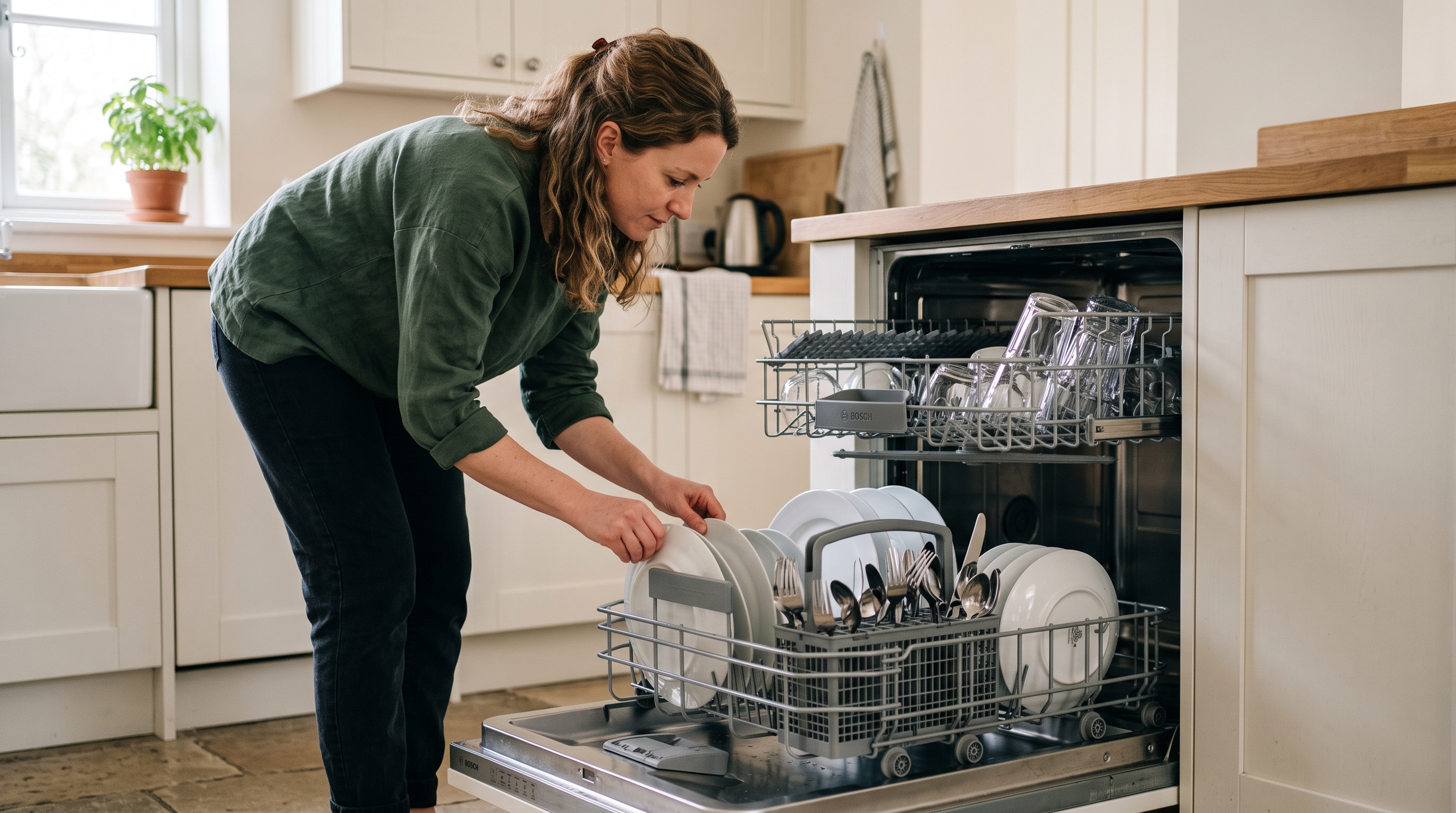
A dishwasher can only clean what the spray can reach. Load it badly and even a decent machine will leave you scraping baked-on pasta off a bowl at the sink. Overcrowding, nesting, and blocking the spray arms are the usual culprits — not a “broken” appliance. Get the loading right and you get cleaner crockery, fewer rewashes, and less water and energy wasted on a second run.
This guide walks through a practical UK-friendly loading method: what to do before you load, how to arrange the bottom and top racks, how to fill the cutlery basket, the mistakes that sabotage a wash, and a short checklist before you press start.
Quick fix: If one side of the load comes out dirty, check the spray arm on that level first. Something tall or a chopping board often stops it spinning — fix the blockage and the “mystery dirt” usually vanishes.
Before you load
A minute of prep saves a cycle of disappointment. You do not need to wash everything by hand first; you do need to give the dishwasher a fair chance.
Scrape, don’t obsessively rinse
- Scrape solids into the bin or food-waste caddy — bones, peelings, lumps of rice, and leftover gravy that would clog the filter.
- Skip a full pre-rinse for everyday plates and bowls. Modern detergents and sensors expect a bit of soil; rinsing everything to a shine can mean the machine under-doses or shortens the cycle.
- Do rinse or soak when something is genuinely filthy: dried porridge, roasted-on cheese, or a pan that has sat overnight. A quick soak in the sink beats three “intensive” programmes.
Clear the sink and check the arms
Bits of food left in the sink can wash into the machine when you rinse a pan, then lodge in the filter or pump. Empty the sink strainer before you start loading.
Spin the spray arms by hand with the racks empty or pulled out. They should turn freely. If an arm catches, look for a utensil, a tall plate, or a bit of debris jammed underneath. A blocked arm is one of the most common reasons for patchy cleaning.
Reminder: In hard-water areas of the UK, keep an eye on dishwasher salt and rinse aid. Salt helps the softener; rinse aid helps water sheet off glass and plastics so they dry clearer. Top them up when the indicators ask — you do not need to refill every wash.
Bottom rack: plates, pots and heavy items
The bottom rack is closest to the strongest spray and the heater in many machines. Put the dirtiest, sturdiest items here.
- Plates: Stand them between the tines, facing the centre (or inward toward the middle spray), slightly angled so water can drain. Leave a gap between plates — jammed together, they shield each other’s faces.
- Pots and pans: Dirty side facing down toward the spray. Angle large pans so water does not pool in the base. Do not wedge a roasting tin so it traps the spray arm underneath.
- Large bowls and serving dishes: Angle them, open side down-ish but tilted, so water runs off. Never nest bowls inside each other — the inner one barely gets washed.
- Tall items: Platters, chopping boards, and oversized bowls must not stop the upper or lower spray arm. If something sits proud of the rack, test the arm spin before you close the door.
Keep the centre of the rack relatively clear where your model has a central spray tower or a middle jet — blocking that path starves the top rack of water.
Top tip: A wooden chopping board, cast-iron pan, or anything labelled “hand wash only” does not belong in the dishwasher. Wood warps and cracks; cast iron loses its seasoning; non-stick coatings can degrade. Those items are a sink job, not a loading puzzle.
Top rack: glasses, mugs and plastics
The top rack is for lighter, more delicate pieces and most plastics. Water is usually a little gentler here, which is kinder to glasses and heat-sensitive items.
- Glasses and stemware: Place them between the supports, angled so water drains from the base. Avoid wedging stems in gaps where they can snap when the rack moves.
- Mugs and cups: Upside down or strongly angled — flat on their side they fill with dirty water and never empty.
- Plastics: Keep them on the top rack, away from the heating element where your machine has one in the base. Lightweight tubs can flip; use clips or tuck them so they stay put. Do not nest plastic containers — they stick together and the insides stay greasy.
- Small bowls: Angle them so the lowest point can drain. A bowl sat dead flat face-down often pools water in the base and dries cloudy or marked.
If your top rack has a fold-down shelf for cups or cutlery, use it for lightweight items only. Overloading that shelf can tip the balance of the rack or drip onto items below.
Cutlery: mix it up, don’t pack it solid
Cutlery baskets vary. Some want handles down; others (especially trays with slots) want handles up. Check your manual once, then stick to that pattern.
- Mix spoons and forks so identical pieces do not nest. Nested spoons wash the outside and leave the inside untouched.
- Knives: Tips down for safety when you unload, unless your basket design says otherwise. Keep sharp knives out of the machine if you care about the edge — dishwashers are rough on fine blades.
- Do not overload the basket. A solid block of metal blocks spray from reaching the middle pieces.
- Ladles and long utensils: Lay them on the top rack if they stick out of the basket and risk jamming an arm. Avoid standing a spatula where it props the spray arm still.
If your machine has a cutlery drawer instead of a basket, lay pieces in a single layer in the slots — overlapping spoons here cause the same nesting problem.
Common loading mistakes
Most “my dishwasher doesn’t clean” complaints trace back to one of these:
- Nesting bowls, cups or spoons — surfaces touching each other get little or no spray.
- Blocking spray arms — a chopping board, tall tray, or utensil handle stops an arm mid-spin.
- Overcrowding — every extra plate that touches its neighbour creates a dirty shadow. If the rack looks packed solid, remove a few items.
- Wooden items, cast iron, and non-dishwasher-safe pieces — damage to the item and sometimes extra debris in the filter.
- Bowls face-down flat — water pools; food residue sits in the puddle.
- Putting plastics on the bottom near a heater — warping and melt risk on some designs.
- Ignoring the filter — a clogged filter recirculates gritty water onto “clean” plates.
Warning: Never force the door shut on a bulging load. If something is stopping the door, it is almost certainly stopping a spray arm or crushing a glass. Rearrange; do not lean on the handle.
Quick checklist before you press start
Run through this once the racks are full:
- Filter clear — lift or twist out the filter (per your model), rinse under the tap, and refit firmly. A monthly habit is enough for light use; weekly if you cook a lot of starchy food.
- Salt and rinse aid — top up if the indicators show low. Softened water and rinse aid improve both wash and dry, especially on glass.
- Spray arms free — spin upper and lower arms; nothing should click or catch.
- Detergent — tablet, powder or gel in the dispenser, not loose in the tub (unless the product instructions say so). Close the dispenser lid properly.
- Programme choice — everyday soil on a normal or eco programme; heavily soiled pans on a stronger cycle. Eco is fine for a well-loaded, moderately dirty machine — it is not a miracle worker for a nested, overcrowded rack.
- Door and seals — nothing trapped in the door seal; racks pushed fully in on their rails.
Frequency reminder: Give the filter a rinse on a set day each week if the household is busy, and wipe the door seal where gunk collects. A clean filter and free spray arms do more for results than buying a “stronger” tablet.
Loading habits that stick
Consistency beats perfection. Load plates the same way every time so gaps stay natural. Keep a mental “no nest” rule for bowls and spoons. When in doubt, leave an item out for the next load rather than cramming it in — two good washes beat one mediocre marathon.
If you share the kitchen, agree a simple house rule: scrape solids, face plates inward, plastics on top, and never put wood or cast iron in. That alone cuts most arguments about whose turn it is to rewash the cereal bowls.
Bottom line: Loading is half the clean. Scrape solids but skip ritual pre-rinsing; angle plates toward the spray; keep bowls and spoons from nesting; put plastics up top; leave spray arms free to spin; and clear the filter when it looks grubby. Follow those few rules and your dishwasher will look a lot more competent — because you finally gave it a chance to work.