

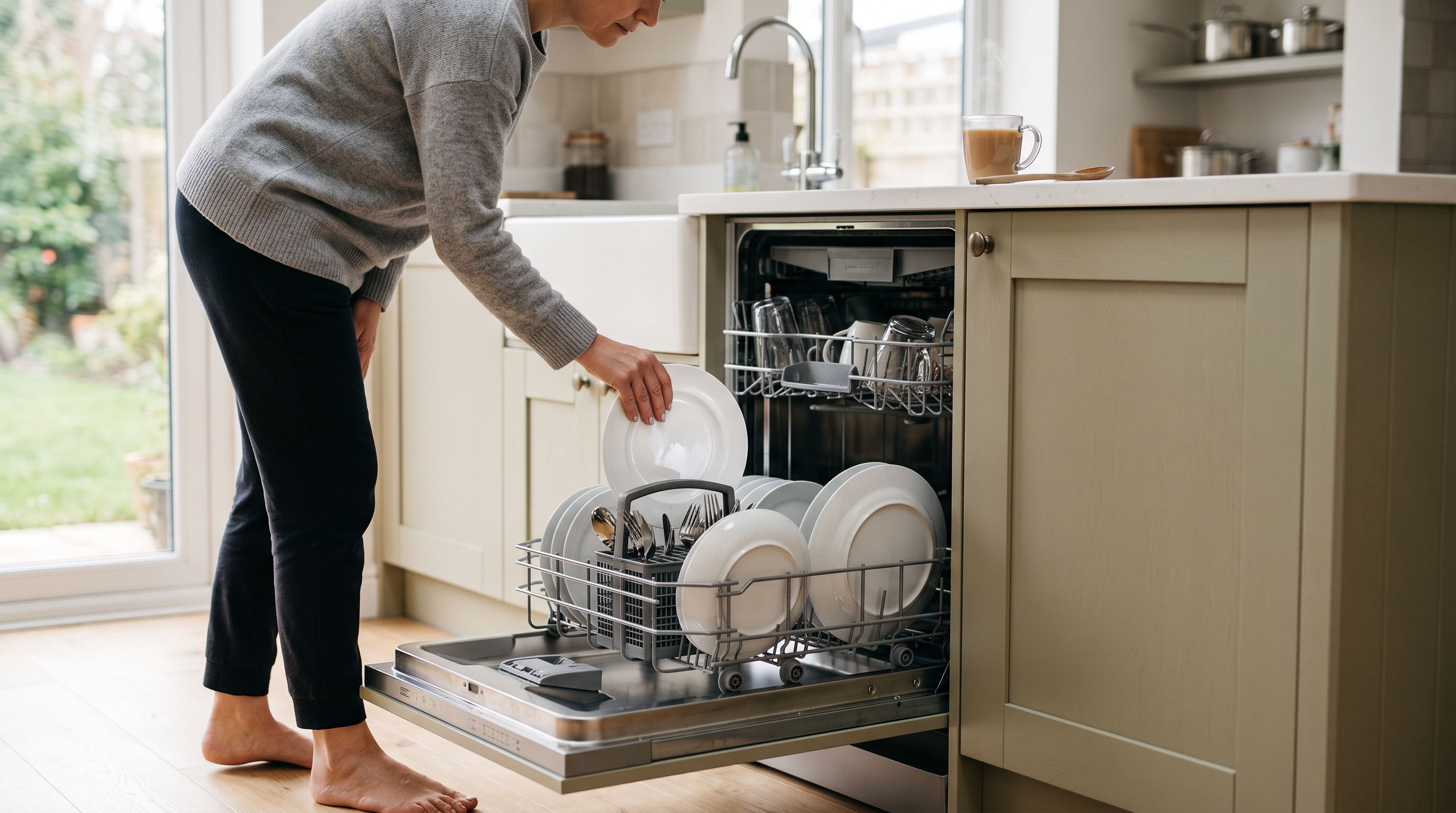
You press start on the eco programme, glance at the display and it says 3:45. Nearly four hours to wash a few plates and the cereal bowls. It is tempting to assume something has gone wrong, or that "eco" is a polite word for "slow". In fact the long running time is the whole point: modern dishwashers save energy by trading heat for time, and the eco programme is where that trade is most obvious.
This guide explains why the eco programme takes three hours or more, whether it really cleans as well as the hotter programmes, when you should use something else, and how to live with the timer without waiting up for it.
Quick answer: The eco programme washes at a lower temperature, so it needs a longer soak and a slower drying phase to get the same result. Heating water is the biggest energy cost in any dishwasher cycle, while running the pump for longer costs very little. A three to four hour eco cycle is normal on a modern machine and is not a sign of a fault.
Why eco takes so long: heat versus time
Every dishwasher cleans using four things working together: heat, time, chemistry (your tablet or powder) and mechanical action (the water jets from the spray arms). Turn one of them down and you have to turn another one up to get the same clean.
The eco programme turns the heat down. Instead of warming the water to the 65 to 70°C of an intensive programme, it typically runs its main wash at a more modest temperature. Most UK dishwashers are plumbed to the cold supply and heat every drop of water themselves, so every degree they do not have to add is energy saved. To make up for the lower temperature, the machine simply gives everything longer to work:
- Longer soaking: dried-on food softens over time, so the eco cycle often includes extended pauses where the dishes sit wet before the main spray.
- More time for the detergent: the enzymes in modern tablets break down starch and protein, and they are designed to do that well at lower temperatures as long as they get enough time.
- Gentle, efficient water use: the machine recirculates a small amount of water many times rather than filling up repeatedly, which also stretches out the cycle.
- A slow drying phase: with a cooler final rinse there is less heat left in the dishes, so drying takes longer. Many machines let the load stand and cool, and some open the door slightly at the end to let the steam out.
The pump and spray arms use relatively little electricity compared with the heating element, so running them for an extra hour or two costs far less than heating the water an extra 15 to 20 degrees would.
The rules behind the eco button
The long eco programme is not just a design whim. Under the ecodesign rules for household dishwashers that have applied in Great Britain since March 2021, every new dishwasher must have a programme called "eco", and that is the programme used to measure the figures on the energy label. The energy rating, water use per cycle, noise level and the programme duration shown on the label all come from the eco programme at full load.
That gives manufacturers a strong reason to make eco as efficient as possible, and the easiest way to do that is to lower the temperature and lengthen the cycle. When the rules were written, the most efficient full-size 14 place setting machines on the market took around 3 hours 42 minutes on eco, and heat pump models were closer to 5 hours. So a display reading somewhere between three and four hours is exactly what you should expect.
Worth knowing: The duration on the energy label is the eco cycle time at full load. If you are comparing dishwashers and a long eco cycle would genuinely annoy you, check that figure before you buy. A few minutes either side makes little difference, but the gap between models can be an hour or more.
Does eco actually clean as well?
For everyday loads, yes. The eco programme has to meet the same cleaning and drying performance standards that the energy label is based on, and it is designed for normally soiled dishes: breakfast bowls, dinner plates, mugs, glasses and cutlery from an ordinary day. That covers most of what goes into most dishwashers.
Where eco can struggle is with things that genuinely need heat:
- Roasting tins and casserole dishes with baked-on or burnt-on residue.
- Heavy grease, such as grill pans and frying pans.
- Very dried-on egg, porridge or cheese that has sat for a day or two.
For those, an intensive or hotter programme is the better choice. You do not need to switch the whole household over to it, just use it when the load calls for it.
Top tip: If you only ever run eco, grease can slowly build up inside the machine, in the filter and in the hoses, because the water never gets hot enough to shift it. Run an empty hot programme with a dishwasher cleaner, or simply run a full hot programme every few weeks, to keep things fresh and stop smells developing.
Is eco really cheaper if it runs for longer?
Usually, yes. A long cycle feels expensive, but the cost of a dishwasher cycle is mostly the cost of heating water. Your dishwasher manual normally has a programme table that lists the approximate energy (in kWh) and water (in litres) for each programme. Compare the eco line with the intensive or 65°C line and you will typically see eco using noticeably less energy, despite taking twice as long.
To put a rough figure on it, multiply the kWh difference by the price you pay per unit on your electricity bill. As an illustration only, if your manual showed eco at 0.8 kWh and intensive at 1.4 kWh, that is 0.6 kWh saved per cycle. Over a year of daily washes, those savings add up to a useful amount, and you will also use less water.
When to use something other than eco
Eco is the sensible default, but it is not the only good option. Here is a simple way to choose:
- Eco: everyday, normally dirty loads when you are not in a hurry. Ideal overnight or while you are out.
- Auto or sensor programme: mixed loads where you are not sure how dirty things are. The machine measures how cloudy the water is and adjusts temperature and time to suit. It will often be shorter than eco but use a little more energy.
- Intensive or 65 to 70°C: pots, pans, roasting dishes and anything greasy or baked on.
- Quick or express: lightly soiled items that only need a freshen up, such as glasses from a drinks evening. Quick programmes are often not designed to dry fully, and some tablets need longer than a short cycle to dissolve, so check whether your detergent says it suits quick washes.
- Half load (if your machine has it): handy when you need something back sooner, though running a full eco load is usually more efficient than two half loads.
How to live with a three-hour cycle
The trick is not to wait for the dishwasher. A few habits make the long eco time almost invisible:
- Run it overnight. Load after dinner, start it before bed and empty it in the morning. If you are on a time-of-use electricity tariff, use delay start so the cycle runs during your cheaper hours.
- Run it while you are out. Start it as you leave for work or the school run. Avoid leaving any appliance running unattended if you have any concerns about the installation, and follow your manufacturer's safety guidance.
- Use delay start to finish on time. Many machines let you set an end time, so the dishes are ready when you get home rather than sitting damp for hours.
- Keep a few spares. A couple of extra mugs and glasses in the cupboard takes the pressure off when the machine is mid-cycle.
- Load it properly. Eco relies on the spray reaching every surface, so do not block the spray arms or the detergent dispenser with tall items.
Reminder: Keep salt and rinse aid topped up. Rinse aid matters even more on eco, because the cooler final rinse leaves less heat for drying. Without it, you are more likely to see water droplets on plastics and spots on glasses.
When a long cycle might be a fault
A three to four hour eco cycle is normal. It is worth investigating if:
- The time on the display keeps going up, or the cycle runs far longer than the time shown in your manual for that programme.
- Every programme, including quick and intensive, suddenly takes much longer than it used to.
- The dishes come out cold and wet at the end of a hot programme, which can point to a heating problem.
- The machine pauses for a long time and then shows an error code.
Common causes include a slow water supply (a partly closed tap or kinked inlet hose), a blocked filter, or a heating fault. Check the simple things first: make sure the water supply tap under the sink is fully open, the inlet hose is not squashed behind the unit, and the filter is clean. If the problem continues, it is time to contact the manufacturer or a qualified engineer.
Bottom line: The eco programme takes three hours or more because it swaps heat for time, which is what saves energy and keeps your energy rating honest. Use it for everyday loads, switch to a hotter programme for greasy or baked-on pots, run a hot cycle every few weeks to keep the machine clean, and set it running overnight or while you are out so the clock never bothers you.