

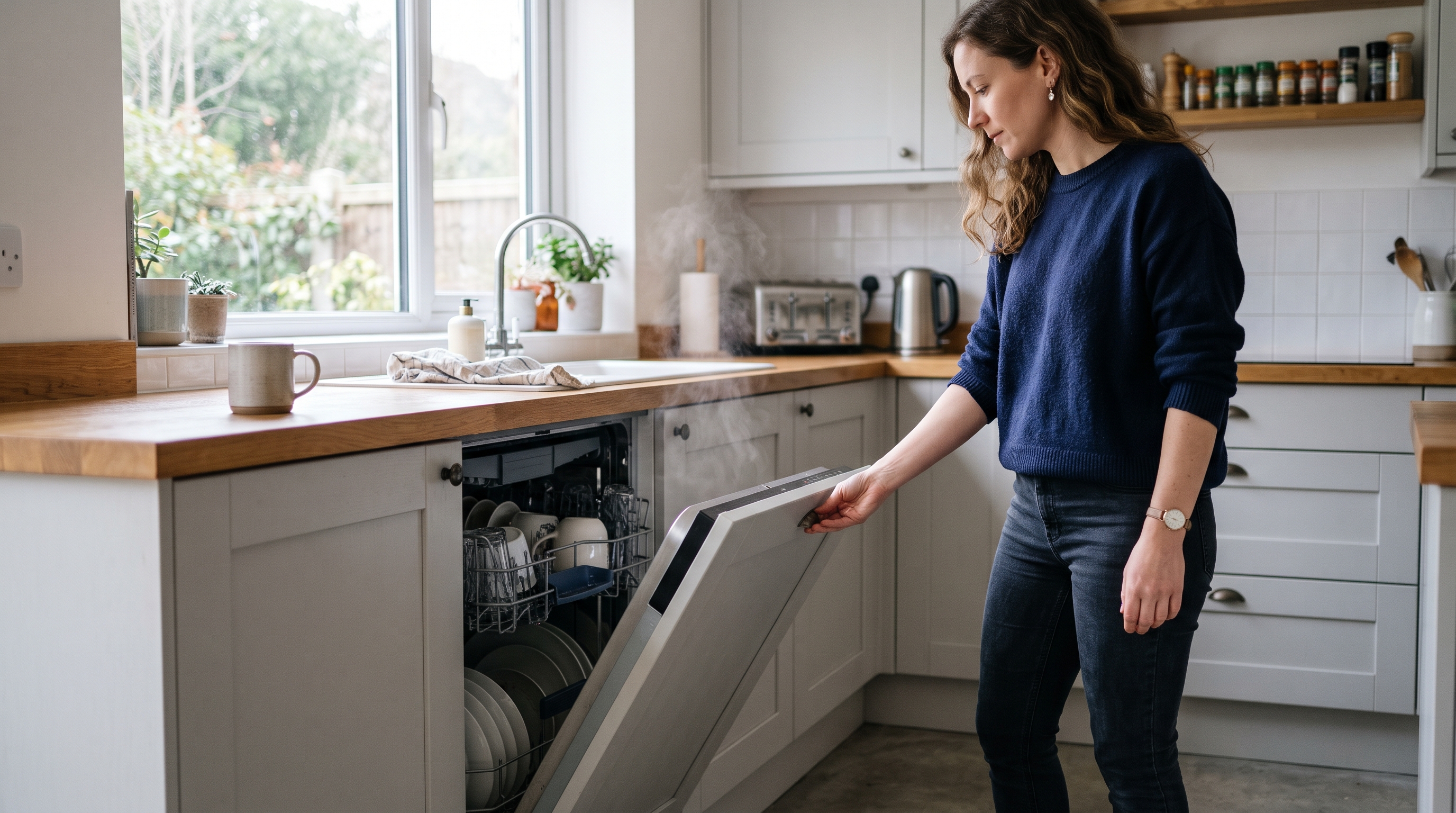
The cycle has finished, the beep has gone off, and you're faced with one of life's smaller domestic dilemmas: do you pop the dishwasher door open, or leave it shut until morning? Ask around and you'll hear both answers with equal conviction. The short version is that leaving the door slightly ajar after a cycle is a good habit for most households, but it isn't compulsory, and there are a few situations where you shouldn't do it at all.
Why Opening the Door Helps
At the end of a cycle the inside of your dishwasher is warm, wet and sealed. Most modern machines dry by heating the final rinse, then letting the moisture condense on the cooler stainless steel walls and run down to the drain. That works, but it's slow, and plastics in particular don't hold enough heat to dry themselves. Opening the door gives all that warm, humid air somewhere to go.
- Drier dishes: Steam escapes instead of settling back onto cups, tubs and the upturned bases of mugs.
- Fewer smells: A dishwasher that stays damp for hours, especially in the filter area and around the door seal, is the ideal home for the bacteria behind that musty pong.
- Less mould on the seal: Black spots on the rubber door gasket and in the bottom corners of the door are almost always a moisture problem. Airing the tub is one of the simplest ways to slow them down.
- A longer-lasting door seal: Rubber that isn't sitting in a damp, sealed space all the time tends to stay supple for longer.
It costs nothing, takes two seconds and doesn't involve any special products, which is a rare combination in appliance advice.
How Far Should You Open It?
You don't need to drop the door fully open. In fact, a fully open door is a trip hazard and puts unnecessary strain on the hinges if anyone leans on it. A gap of a few centimetres is plenty. Many doors will stay where you leave them; if yours springs shut, open it just past the first point of resistance or until it rests on its own.
If you're going to empty the machine within the next half hour or so, a gap is ideal. If it's going to sit overnight, a gap is still better than shutting it tight, as long as the safety points below don't apply.
When Not to Leave the Door Open
Small children and pets
An open dishwasher is right at toddler height and full of interesting things: sharp knives in the cutlery basket, glass, and detergent residue in the dispenser. Dishwasher detergent is an irritant and not something you want on small hands or a curious dog's tongue. If you have little ones or pets wandering the kitchen, keep the door shut and use the child lock if your machine has one. You can air it once they're out of the way, or simply wipe the seal now and then instead.
Steam and wooden or laminate worktops
If you open the door the moment a hot cycle finishes, a cloud of steam can rise straight into the underside and front edge of the worktop above. Over time that can swell chipboard edges, lift laminate and damage the finish on solid wood. Integrated and built-under dishwashers usually come with a steam protection strip that fixes to the underside of the worktop for this reason, but it's worth checking yours is actually fitted, as it's often left in the bag during installation.
The easy fix is to wait. Give the machine ten to fifteen minutes after the cycle ends for the worst of the steam to condense inside, then open the door. You'll still get most of the drying benefit without blasting the kitchen units.
Busy walkways
In a narrow galley kitchen, even a partly open door can catch shins. If you can't open it without creating a hazard, crack it open while you're in the room and close it before you leave.
What About Automatic Door Opening?
Plenty of newer dishwashers can do this job for you. Several brands, including Bosch, Neff, Siemens and Miele, offer models that pop the door open by a small amount at the end of the drying phase. It's the same idea as opening it by hand, timed for when the steam has mostly gone, and it usually means the machine can use less heat to dry the load.
If you have this feature, there's no need to open the door further yourself. If it's switched off in the settings menu, it's often worth turning back on. Do check the manual, though: some machines let you disable it, which you may want to do if you have small children.
Should You Leave the Door Open Between Uses?
This is a slightly different question. If you load dirty dishes over a day or two before running the machine, leaving the door fully shut traps the smell of old food in a warm, enclosed space. A small gap lets air circulate and keeps odours down. The same safety rules apply: not if children or pets can reach it, and not if it blocks the kitchen.
If you're going away for a week or more, empty the machine, run the filter under the tap, wipe the door seal and leave the door slightly open. You'll come back to a dishwasher that smells of nothing, which is exactly what you want.
If Your Dishwasher Still Smells or Grows Mould
Opening the door helps, but it won't fix a dishwasher that's already grubby. If you're still getting smells or black spots, work through these in order:
- Clean the filter. Twist it out from the base of the tub, rinse it under warm running water and scrub gently with an old toothbrush. Do this every week or two if you have a busy household.
- Wipe the door seal and the bottom edge of the door. Food and grease collect in the fold of the gasket and along the lower lip of the door, which the spray arms never reach. A cloth with warm soapy water does the job.
- Run a hot maintenance wash. An empty cycle on the hottest programme, with a dishwasher cleaner, clears grease from the pipes and sump. Once a month is a sensible routine.
- Run a hot programme regularly. If you only ever use eco or quick washes, grease builds up faster. A hot wash every so often keeps things clean.